
Universal Testing Machine Single column, 2 to 10 kN
Single-column benchtop UTM from 2 to 10 kN (450 to 2,248 lbf), 150 mm test space width and 890 mm stroke, the most versatile model in the line.


The MBIOI-10-M2 is the single-column model in the line and the entry point for tests that require more than 1 kN. Its 10 kN (2,248 lbf) capacity covers most tests on polymers, textiles, paper, wood and small components.
The 150 mm test space width is three times that of the portable model, accommodating test specimens with a larger cross-section, and the 890 mm vertical stroke allows high elongations without repositioning the sample, which is necessary for films and elastomers that stretch to several times their original length.
At 105 kg, it is a fixed benchtop machine. When the test calls for an even longer stroke, there is an extended-column version with 1,290 mm; above 10 kN, the recommended model is the MBIOII-50-M2.
Typical applications
Materials and products commonly tested on this model. For other applications, talk to our technical team.
Available capacities
The MBIOI-10-M2 is offered in 2 kN, 5 kN or 10 kN. The technical data on this page refer to the frame, with the same stroke, test space width and dimensions across the 3 capacities.
2 kN
450 lbf
5 kN
1,124 lbf
10 kN
2,248 lbf
The same capacities are available in other frames: the MBIOI-10-M2 extended in 2 kN, 5 kN and 10 kN and the MBIOII-50-M2 in 5 kN and 10 kN. For the same capacity, the choice between frames depends on the specimen size (test space width) and the elongation to fracture (vertical stroke).
What the MBIOI-10-M2 tests in practice
Estimated breaking force of common test specimens, compared with each capacity of the MBIOI-10-M2. The estimate is the cross-sectional area times the typical strength of the material.
| Test specimen | Estimated force | 2 kN | 5 kN | 10 kN |
|---|---|---|---|---|
| Rubber, ISO 37 type 1 dumbbell (6 × 2 mm, up to 25 MPa) | 0.3 kN | Suitable | Suitable | Suitable |
| Plastic, ISO 527 type 1A specimen (10 × 4 mm, up to 70 MPa) | 2.8 kN | Above | Suitable | Suitable |
| Steel sheet, 12.5 × 1 mm (400 MPa) | 5 kN | Above | Near limit | Suitable |
| 10 mm CA-50 rebar (Brazilian rebar grade), tension | 47 kN | Above capacity; recommended: MBIOII-50-M2 | ||
| Mortar, 4 × 4 cm half-prism in compression (up to 40 MPa) | 64 kN | Above capacity; recommended: MBIOII-200-M2 | ||
| 16 mm CA-50 rebar, tension | 121 kN | Above capacity; recommended: MBIOII-200-M2 | ||
| Concrete, 10 × 20 cm cylinder in compression (30 MPa) | 236 kN | Above capacity; recommended: MBIOII-300-M2 | ||
| 25 mm CA-50 rebar, tension | 295 kN | Above capacity; recommended: MBIOII-300-M2 | ||
| 32 mm CA-50 rebar, tension | 483 kN | Above capacity; recommended: MBIOII-600-M2 | ||
Near limit: above 80% of capacity, with no margin for a material stronger than expected. Below range: less than 2% of the smallest load cell of the model (0.1 kN (22 lbf)). Reference values; the actual material may vary. How to calculate it for your specimen is explained in the universal testing machine guide.
Comparison with neighboring models
Where the MBIOI-10-M2 sits in the M2 line, between the nearest smaller and larger models.
| Model | Capacity | Type | Vertical crosshead travel | Test space width | Speed | Weight |
|---|---|---|---|---|---|---|
| MBIOI-1P-M2 | 200 N to 1 kN | Portable | 425 mm | 48 mm | 0.02 to 600 mm/min | 15 kg |
| MBIOI-10-M2 (este) | 2 to 10 kN | Single column | 890 mm | 150 mm | 0.02 to 500 mm/min | 105 kg |
| MBIOII-50-M2 | 5 to 50 kN | Dual column | 1,300 mm | 425 mm | 0.02 to 500 mm/min | 190 kg |
Types of tests performed
We cover a wide range of mechanical tests, whether running standardized tests according to specific standards or developing custom tests to meet your needs.
 Tensile testAxial tensile force up to fracture: modulus, yield strength, tensile strength and elongation.
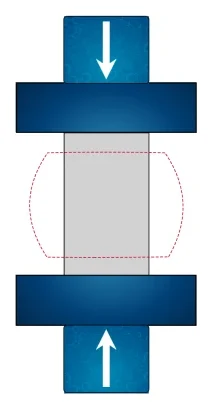 Compression testCrushes the specimen between platens: compressive strength and modulus.
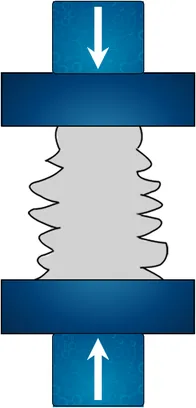 Crush testCompresses corrugated board, paper tubes and boxes: ECT, FCT, RCT and BCT.
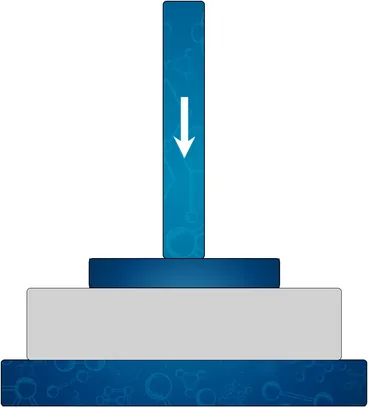 Foam indentation (IFD)A circular indenter foot compresses the foam to 25% and 65%: firmness of mattresses and seats (IFD).
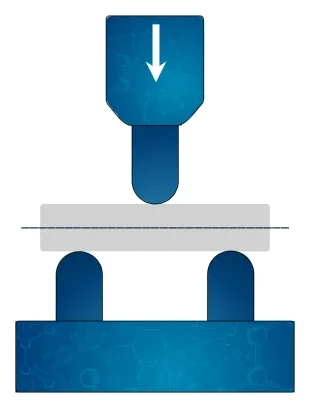 Flexural testLoads a bar supported at 3 or 4 points: flexural strength and flexural modulus.
 Shear testMakes one section slide over the other: pins, rivets, joints and adhesives.
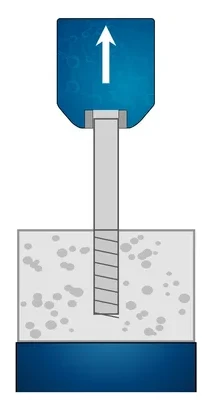 Pull-out testPulls an embedded element, such as an anchor or a bolt, until it is pulled out.
 Bond testMeasures the stress that detaches a coating, mortar or adhesive from the substrate.
 Peel testPeels tapes, films and laminates at 90°, 180° or in a T-peel: force per unit width.
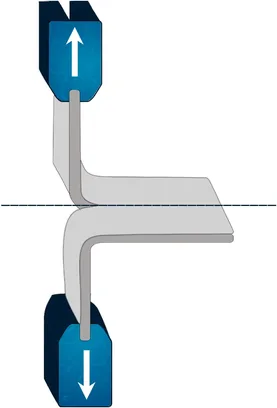 Tear testMeasures the force needed to initiate or propagate a tear in film, rubber or fabric.
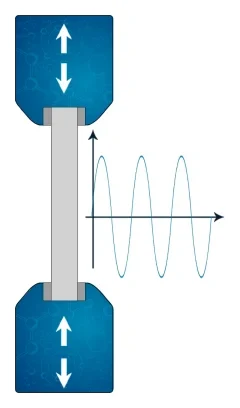 Fatigue testApplies cyclic loading until failure: S-N curve and fatigue limit.
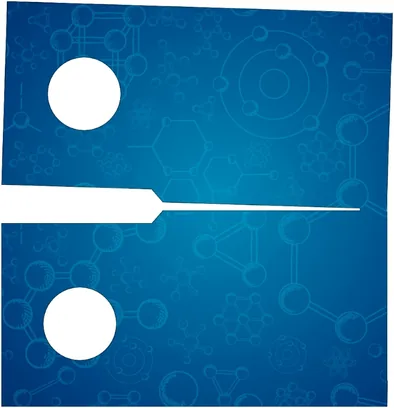 Fracture toughnessLoads a pre-cracked specimen and measures its resistance to crack propagation: KIc.
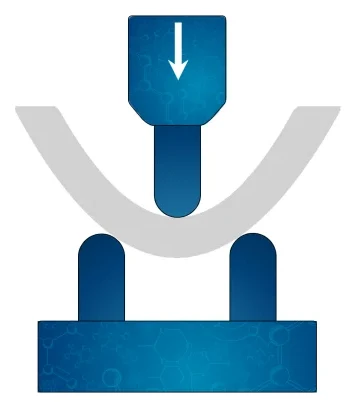 Bend testBends the specimen over a mandrel to 90° or 180° and checks for cracks.
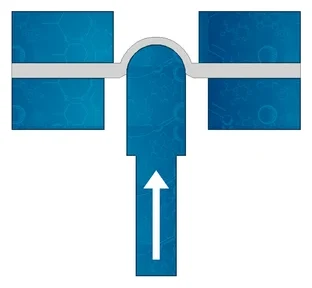 Cupping testA spherical punch stretches a clamped sheet until it cracks: Erichsen index.
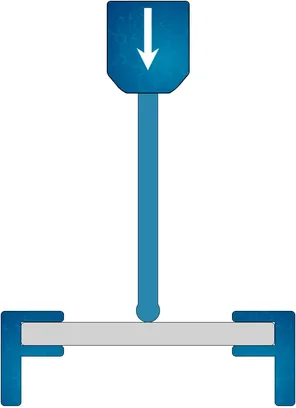 Puncture resistance testA probe pierces film, geotextile or gloves: puncture force and energy.
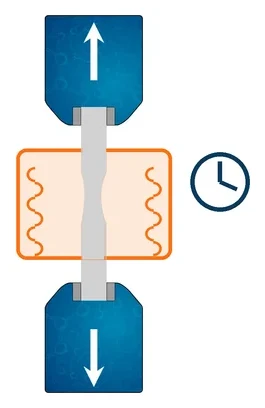 Creep testConstant load over a long time, usually at high temperature: strain vs. time.
 Torsion testTwists one end of the specimen against the other: torque, angle and shear modulus G.
 Axial-torsion testAxial force and torque applied simultaneously to the same specimen: biaxial stress state.
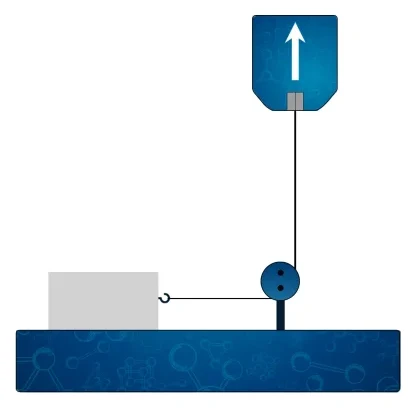 Coefficient of frictionForce to slide one surface over another: static and kinetic friction (ASTM D1894).
Need a different test? Talk to Biopdi about a custom test.
Main features
Technical specifications and equipment features.
- Model:
- MBIOI-10-M2
- Available capacities:
- 2, 5 or 10 kN (450, 1,124 or 2,248 lbf)
- Maximum frame capacity:
- 10 kN (2,248 lbf)
- Test speed:
- 0.02 to 500 mm/min
- Vertical crosshead travel:
- 890 mm
- Horizontal clearance (test space width):
- 150 mm
- Dimensions (L × W × H):
- 507 × 450 × 1,330 mm
- Weight:
- 105 kg
- Power:
- 540 W
- Power supply:
- 220 V, 60 Hz
Drive: preloaded recirculating ball screws with cylindrical guide columns
Non-volatile memory: calibration data stored independently of the computer
Mechanical front panel with buttons (on/off, up/down, home, reference, emergency stop)
Digital PLC front panel with speed adjustment (optional)
Built-in touchscreen (optional)
Force measurement with interchangeable load cells, class 1 accuracy (ISO 7500-1, ABNT NBR ISO 7500-1:2023 in Brazil)
Automatic transducer recognition and setup
Data communication: digital via TCP-IP, USB or Serial
Measurement channels included, up to 4 additional strain channels, support for LVDTs and extensometers
Software for adjustments, configuration, data acquisition, analysis and report generation
Corrosion-resistant electrostatic exterior paint
Technical support throughout Brazil
1-year warranty against manufacturing defects
ISO 9001 certification
Mechanical and electronic limit switches (digital scale), optional
Main fixtures
Most used grips and fixtures. The capacity of each one must be compatible with the test force and with the capacity of the model.

Tensile test with wedge grips
Wedge-action grip, in 5 kN, 20 kN and 200 kN.

Compression test
Compression platens, in 1 kN, 50 kN and 300 kN.

Flexural test
Flexural test fixture, in 10 kN, 50 kN and 300 kN.

Shear test
Fixture per ASTM C273/C273M-20.

Tensile test with lever grips
Lever-action grip, 5 kN.

Tensile test of wires
Eccentric roller grip for wires and filaments.

Tensile test of threaded specimens
Grip for threaded specimens and bolts.

Coefficient of friction
Friction testing per ASTM D1894.
Accessories: extensometers
The MBIOI-10-M2 accepts up to 4 strain channels in addition to force and position, with automatic transducer recognition, for extensometers and LVDTs. An extensometer is required when the test determines the modulus of elasticity or the offset yield strength.

Clip-on
Attached to the specimen, for modulus and Rp0.2. L0 from 25 to 100 mm, travel up to 50 mm.

Long-travel
For rubbers, films and ductile plastics. L0 from 10 to 100 mm, travel up to 250 mm.

Deflectometer
Measures specimen deflection in flexural testing. Travel from 1 to 50 mm.

COD clip gauge
Measures crack mouth opening displacement (CMOD) at the notch. L0 from 5 to 20 mm, travel up to 12 mm.
Available models: codes, L0 and travel
Four families for measuring strain directly on the test specimen, with up to 4 simultaneous channels in the BioLab software. L0 is the initial gauge length.
Clip-on
Attached directly to the specimen, for small strains such as modulus of elasticity and offset yield strength.
| Code | L0 | Travel |
|---|---|---|
| EXT-100-001 | 25 mm | −2.5 to +2.5 mm |
| EXT-100-002 | 25 mm | 0 to +12.5 mm |
| EXT-100-003 | 25 mm | 0 to +25 mm |
| EXT-100-003 | 50 mm | −5 to +5 mm |
| EXT-100-004 | 50 mm | 0 to +25 mm |
| EXT-100-005 | 50 mm | 0 to +50 mm |
| EXT-100-006 | 80 mm | 0 to +8 mm |
| EXT-100-007 | 80 mm | 0 to +40 mm |
| EXT-100-008 | 100 mm | 0 to +50 mm |
Long-travel
For materials that elongate a great deal before breaking, such as polymers, elastomers and films.
| Code | L0 | Travel |
|---|---|---|
| EXT-200-001 | 10 to 100 mm | 25 mm |
| EXT-200-002 | 10 to 100 mm | 50 mm |
| EXT-200-003 | 10 to 100 mm | 100 mm |
| EXT-200-004 | 10 to 100 mm | 150 mm |
| EXT-200-005 | 10 to 100 mm | 250 mm |
Deflectometer
Measures the deflection of the test specimen in flexural tests.
| Code | Travel |
|---|---|
| EXT-300-001 | 1 mm |
| EXT-300-002 | 4 mm |
| EXT-300-003 | 6 mm |
| EXT-300-004 | 12 mm |
| EXT-300-005 | 25 mm |
| EXT-300-006 | 50 mm |
COD clip gauge
Measures crack mouth opening displacement (CMOD) in tests on notched specimens, such as the notched 3-point flexural test.
| Code | L0 | Travel |
|---|---|---|
| EXT-400-001 | 5 mm | +2.5 mm |
| EXT-400-003 | 10 mm | +4 mm |
| EXT-400-004 | 12 mm | +7 mm |
| EXT-400-005 | 20 mm | +12 mm |
Accessories: load cells
The MBIOI-10-M2 works with interchangeable load cells from 1 kN to 10 kN. Using the load cell whose capacity is closest to the test force keeps the measurement within the verified range.

BioLab Software
The machine is operated by BioLab, software developed by Biopdi. It controls the machine, acquires force, position and up to 4 extensometer channels, calculates results according to the selected standard or method and generates reports in PDF, HTML and CSV. It runs on a computer with Windows 10 or later, connected via USB or serial, and works without internet.


Test standards supported
The Universal Testing Machine meets the main Brazilian (ABNT NBR) and international (ISO and ASTM) standards, with class 1 force measurement according to ISO 7500-1 (ABNT NBR ISO 7500-1:2023 in Brazil). For other standards, contact our technical team.
Tensile test
22 normas- ABNT NBR ISO 6892-1:2024metals, room temperature
- ABNT NBR ISO 6892-2:2024metals, elevated temperature
- ASTM E8/E8M-25metais
- ABNT NBR 7549:2021aluminum and aluminum alloys
- ABNT NBR 6207:2024steel wire
- ABNT NBR 6349:2022prestressing bars, strands and wires
- ABNT NBR 6810:2010metallic components of electrical wires and cables
- ABNT NBR 15796-5:2019NiTi wire for implants
- ABNT NBR 15664-4:2020coating adhesion of implants
- ABNT NBR ISO 10319:2026geosynthetics, wide-width strip
- ABNT NBR ISO 10321:2013geosynthetic seams
- ABNT NBR NM ISO 1924-2:2012paper and board
- ABNT NBR 15010:2017tissue paper, wet
- ABNT NBR ISO 12625-12:2026tissue paper, perforations
- ABNT NBR 9141:1998optical and telephone cables
- ABNT NBR 13223:1994telephone cables
- ABNT NBR 13978:1997optical cables
- ABNT NBR 13512:2008optical cables, fiber strain
- ABNT NBR 14075:1998optical cord
- ABNT NBR 16645:2017microdutos
- ASTM D6775-13(2024)textile tapes and webbing
- ASTM D1414-22seal rings (O-rings)
Compression test
7 normas- ABNT NBR 5739:2018concrete, cylindrical test specimens
- ABNT NBR 6739:2009corrugated board packaging
- ABNT NBR 12095:1991elastomeric marine fenders
- ABNT NBR 12132:1991telephone cables
- ABNT NBR 13507:2008optical cables
- ABNT NBR 15270-2:2023ceramic blocks and bricks
- ASTM D4833/D4833M-07(2020)geomembrane puncture
Flexural test
15 normas- ABNT NBR 12142:2010concrete, flexural tensile strength of prisms
- ABNT NBR 7562:1985cast iron pipe, ring
- ABNT NBR 7587:1985cast iron pipe, strip
- ABNT NBR 15668-2:2009intramedullary nail, 4-point
- ABNT NBR 15676-2:2017bone plates
- ABNT NBR 15700-6:2009external bone fixators
- ABNT NBR 13514:2009optical cables, alternating bending
- ABNT NBR 14405:2015optical cable splice
- ABNT NBR 15445-2:2006optical fiber, 2-point
- ABNT NBR 13279:2005mortar, flexural tensile and compressive strength
- ABNT NBR 12067:2017flat glass
- ABNT NBR 7190-4:2022timber, structural members
- ABNT NBR 7190-2:2022timber, mechanical grading of members
- ABNT NBR ISO 4049:2026dental composite resins
- ISO 6872:2024dental ceramics, biaxial flexure
Shear test
15 normas- ABNT NBR 8309:2006aluminum rivets and wire
- ABNT NBR 11908:2015cast iron pipe
- ASTM C273/C273M-20sandwich panel cores
- ASTM D3163-01(2023)bonded rigid plastic joints (lap shear)
- ABNT NBR 5916:2026welded steel wire mesh, joint
- ABNT NBR 7190-3:2022solid wood, defect-free (clear) test specimens
- ABNT NBR 7190-6:2022glued laminated timber, glue line
- ABNT NBR 14827:2002anchors in concrete and masonry
- ABNT NBR ISO 12466-1:2012plywood, bonding quality
- ABNT NBR 9908:2019elastomeric adhesive
- ABNT NBR 10459:2023adhesives, creep of bonded joints
- ABNT NBR 5537:2002brake friction material
- ABNT NBR ISO 6311:2006brake linings
- ABNT NBR 15664-5:2020coating adhesion of implants
- ABNT ISO/TS 11405:2014adhesion to tooth structure
Bend test
7 normas- ABNT NBR ISO 7438:2022metais
- ABNT NBR 17005:2021steel bars and wires for reinforced concrete (Brazil)
- ISO 5173:2023welded joints
- ABNT NBR NM-COPANT 10:2000steel tubes
- ABNT NBR NM 59:2000reverse bend test of steel sheet and strip
- ABNT NBR 13518:2011optical cables
- ABNT NBR 9135:2011telecommunication cables
Coefficient of friction
1 norma- ASTM D1894-24plastic film and sheeting
Adhesion and peel
1 norma- ASTM D3330/D3330M-04(2025)adhesive tapes, 180° and 90° peel
Strain measurement (extensometry)
3 normas- ASTM E83-25extensometer calibration and classification
- ISO 9513:2012extensometer calibration
- ABNT NBR ISO 9513:2013Brazilian (ABNT) adoption of ISO 9513
Machine calibration
2 normas- ABNT NBR ISO 7500-1:2023force-measuring system, class 1
- ABNT NBR ISO 376:2012force-proving instruments
Safety
2 normas- NR-12safety of machinery and equipment (Brazilian regulatory standard)
- NR-10safety in electrical installations (Brazilian regulatory standard)
Videos and presentations
Presentations and tensile tests of metals and polymers on Biopdi universal testing machines.


Models and capacities
Select a model to see detailed specifications.

Portable
200 N to 1 kN
45 to 225 lbf
MBIOI-1P-M2
Single column
2 to 10 kN
450 to 2,248 lbf
MBIOI-10-M2

Extended column
2 to 10 kN
450 to 2,248 lbf
MBIOI-10-M2

Dual column
5 to 50 kN
1,124 to 11,240 lbf
MBIOII-50-M2

Dual column
100 to 200 kN
22,481 to 44,962 lbf
MBIOII-200-M2

Floor-standing
300 kN
67,443 lbf
MBIOII-300-M2

Floor-standing
600 kN
134,886 lbf
MBIOII-600-M2

Floor-standing
1,000 kN
224,809 lbf
MBIOII-1000-M2
Frequently asked questions
Common questions about this model. For further information, contact our technical team.
What is the difference between the standard MBIOI-10-M2 and the extended column version?
The capacity is the same, 10 kN. What changes is the vertical stroke: 890 mm on the standard model versus 1,290 mm on the extended one. The extended version is recommended for high-elongation materials, such as films and elastomers, which can reach the end of travel before breaking on the standard model.
Is this model enough for testing metals?
It depends on the specimen cross-section. The 10 kN capacity covers wires, thin sheets and small cross-section profiles, but standard metallic tensile test specimens usually require more. In those cases the recommended model is the MBIOII-50-M2, rated at 50 kN.
What space and electrical supply does the machine require?
It has a 507 × 450 mm footprint, stands 1,330 mm tall and weighs 105 kg, so it requires a sturdy bench or its own stand. Power supply is 220 V single-phase, 60 Hz, 540 W, with no need for a three-phase supply.
Can strain be measured with an extensometer?
Yes. The machine accepts up to 4 additional strain channels, supporting LVDTs and extensometers, and automatically recognizes and sets up the connected transducers.
What comes with the machine and what is the warranty?
It comes with data acquisition, analysis and reporting software, an instruction manual and a class 1 load cell in accordance with ISO 7500-1:2023 (ABNT NBR ISO 7500-1 in Brazil). 1-year warranty against manufacturing defects and technical support in Brazil. Biopdi is ISO 9001 certified.
In which capacities is the MBIOI-10-M2 offered?
Available in 2 kN, 5 kN or 10 kN (450 lbf, 1,124 lbf, 2,248 lbf). The frame is the same across all 3 capacities, with the same stroke, test space width and dimensions; the choice starts from the highest force the lab needs to measure.
Which load cells can be used on the MBIOI-10-M2?
The interchangeable load cells for this model range from 0.1 kN (22 lbf) to 10 kN (2,248 lbf): 0.1 kN (22 lbf), 0.5 kN (112 lbf), 1 kN (225 lbf), 2 kN (450 lbf), 5 kN (1,124 lbf), 10 kN (2,248 lbf). Using the load cell whose capacity is closest to the test force keeps the measurement within the verified range, with class 1 accuracy per ISO 7500-1:2023 (ABNT NBR ISO 7500-1:2023 in Brazil).
What is the test speed range of the MBIOI-10-M2?
From 0.02 to 500 mm/min. The speed for each test is set by the material standard and programmed in the BioLab software, which also supports constant or variable force tests and stepwise cyclic tests.
Request your quote
Price, delivery time and commercial terms for the Single column, 2 to 10 kN. Fill in the form below and our team will reply with a technical proposal.
Reply within 24 business hours
A proposal covering capacity, fixtures and the standards met, not just the price.
Configured for your test
Grips, load cells and software selected based on your test specimen.
In-house manufacturing, ISO 9001
Installation, training and technical support provided by the people who designed the machine.